Binder Jetting 3D Sand Mold Printers
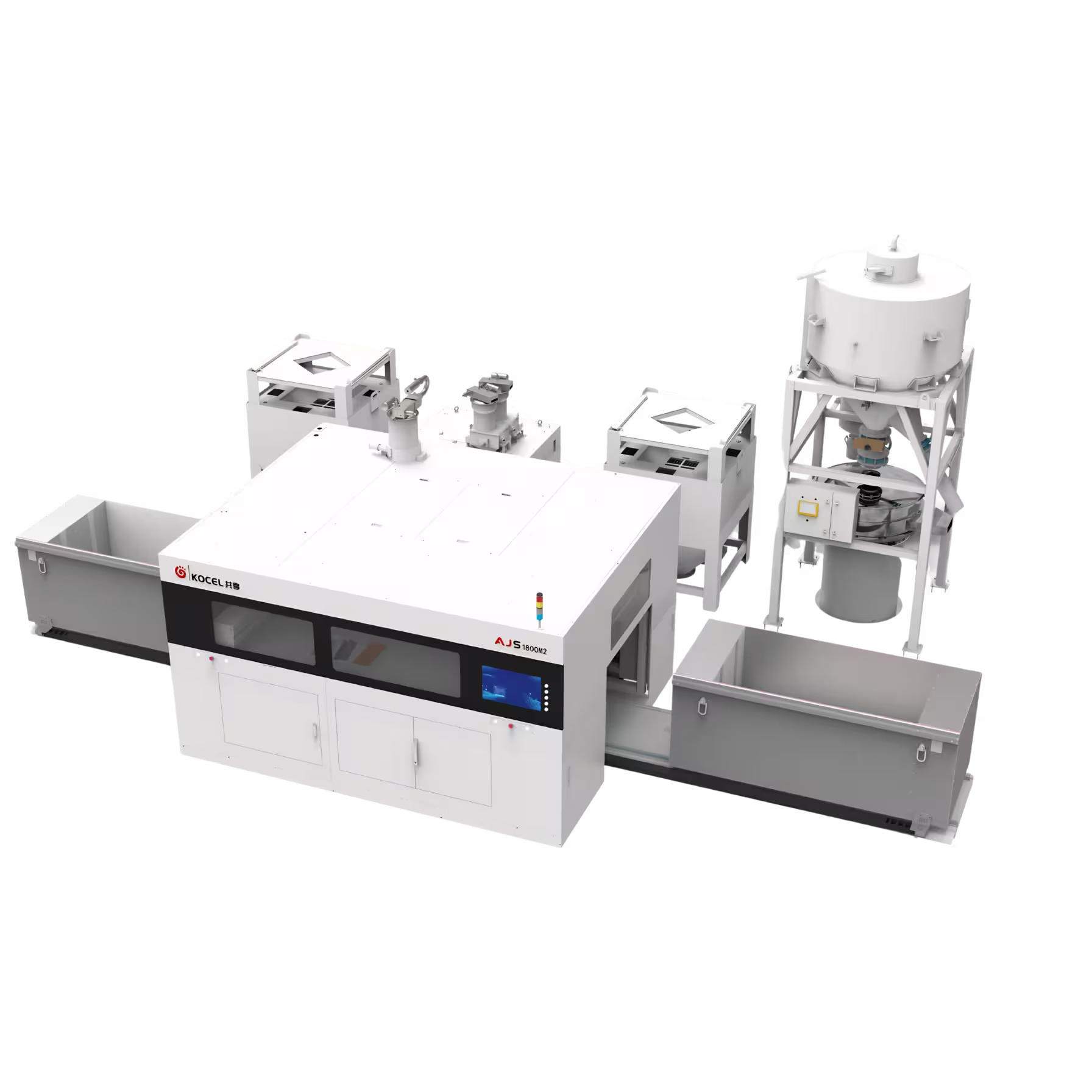
Produce casting-ready sand molds and cores directly from CAD data — no pattern or core box required. The 1800×1000×700 mm build volume and dual jobbox system deliver continuous binder jetting production from prototype to series.
Binder Jetting Technology
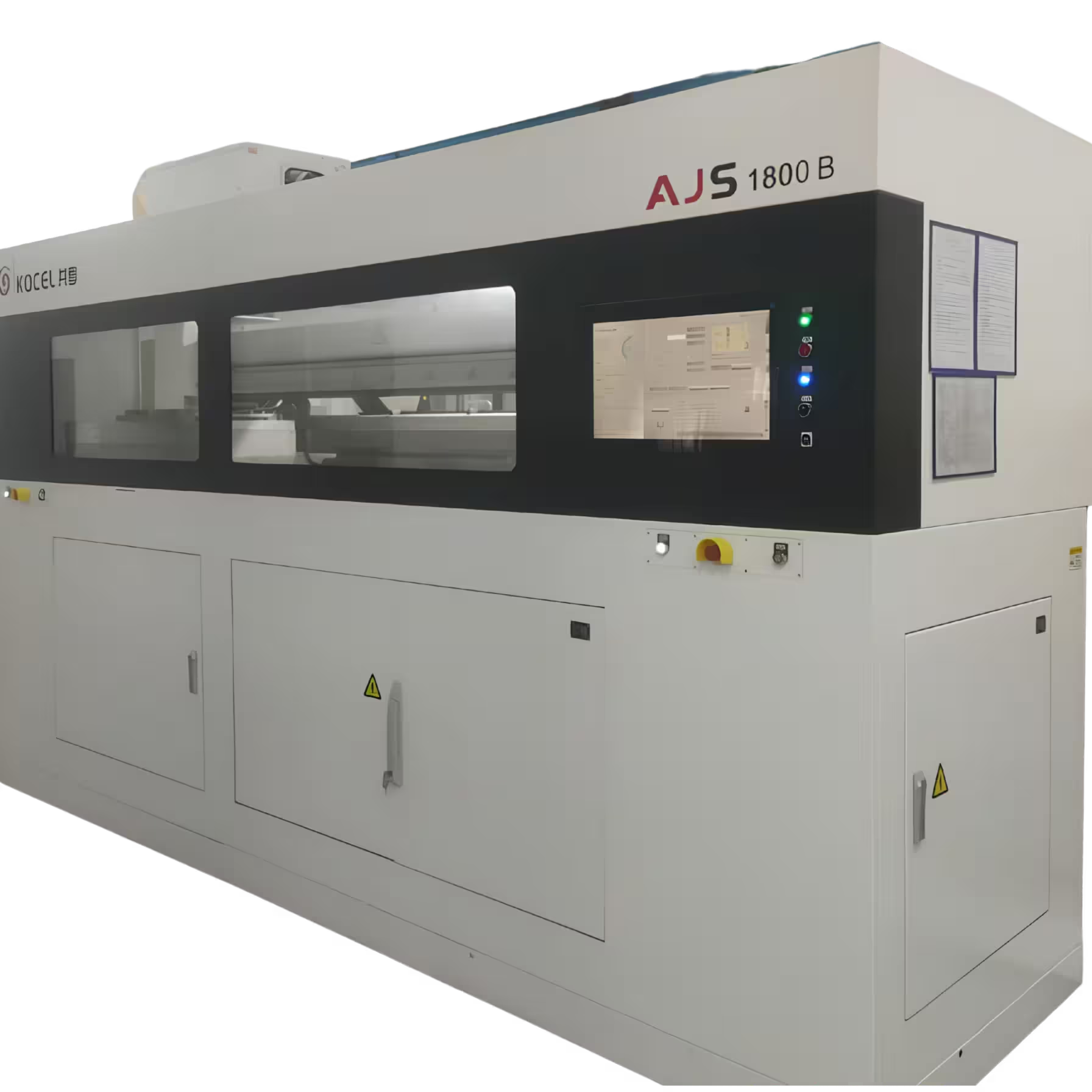
Conventional foundry processes require weeks of pattern preparation — and every design revision means starting over. AJS1800 removes these constraints: no physical pattern or core box needed. Casting-ready sand molds emerge from a CAD file in hours.
Applications
Technical Specifications
From build volume to resin compatibility, every technical parameter of the AJS1800 in one table.
| Technical Parameter | Value / Description |
|---|---|
| Product Model | KOCEL AJS1800 |
| Printing Technology | Binder Jetting (3DP — Three Dimensional Printing) |
| Maximum Build Volume (X×Y×Z) | 1800 × 1000 × 700 mm |
| Machine Overall Dimensions | 11,200 × 3,350 × 2,750 mm |
| Print Speed | > 170 L/hour (nominal capacity) |
| Z-Axis Layer Thickness | 0.20 mm – 0.50 mm (adjustable) |
| Print Accuracy | ±0.3 mm |
| Printhead Resolution | 400 dpi |
| Build Box Configuration | Dual Jobbox (Dual Build Platform) |
| Software Optimization | Jump White (Smart Void Skipping) |
| Compatible Sand Types | Silica sand, Ceramic sand, Chromite sand |
| Compatible Binder (Resin) Types | Furan, Phenolic, Inorganic binder |
| Sand Reclamation | Automatic sieving and recirculation system |
| Liquid Waste Discharge | Zero (Zero Liquid Discharge) |
| Machine Weight | ~15 tons |
| Suitable Casting Metals | Aluminium, Gray iron, Ductile iron, Steel, Stainless steel alloys |
| Target Industries | Automotive, Aerospace, Defense, Pump-Valve, Heavy Machinery, Energy |
Comparison
The AJS1800 removes the time and cost constraints of conventional casting preparation.
| Criterion | Conventional Molding | KOCEL AJS1800 (3D Printing) |
|---|---|---|
| Mold Preparation Time | 2–8 weeks | 1–3 days |
| Pattern / Tooling Cost | High (wood/metal pattern) | Zero |
| Design Change Cost | High (re-pattern) | None (CAD update only) |
| Complex Geometry Capability | Limited | Unlimited |
| Minimum Production Quantity | High volume for economy | Single piece economical |
| Dimensional Accuracy | Pattern-dependent | ±0.3 mm |
| Sand Waste | High | Minimal with reclamation |
Frequently Asked Questions
AJS1800 replaces the pattern and core box entirely. Sand molds and cores are produced directly from a CAD file — no wooden or metal tooling required. At the prototype stage, tooling cost drops to zero and design changes can be applied within hours. For medium-to-large complex-geometry castings, it reduces a multi-week pattern cycle to a few days.
Single-jobbox systems sit idle while the operator clears and resets the build box. With dual jobboxes, one box builds while the other is prepared. The machine switches immediately at job completion — downtime is minimal and daily output increases substantially.
The system is compatible with furan, phenolic, and inorganic binder systems. Sand options include silica, ceramic, and chromite. This flexibility supports a wide material range — from aluminium to ductile iron — on a single platform. Binder selection is determined by the cast metal and required mold strength.
High-temperature-resistant sand molds and cores can be produced for aluminium, gray iron, ductile iron, steel, and stainless steel alloys. The binder type is selected to match the casting metal and quality requirements, enabling a wide alloy range on a single machine.
KOCEL AJS1800 is engineered for industrial foundry conditions. Precision mechanical components and linear guides are protected by fully sealed dust- and heat-resistant seals. The integrated automatic sand reclamation system minimises operator intervention. With a standard daily inspection routine, the machine delivers long-term reliable operation.
Pattern and core box manufacturing costs are eliminated entirely. At the prototype stage and for low-volume custom parts, a multi-week tooling lead time shrinks to a few days. Design revisions require only a CAD update — a new mold can be in production the same day with no additional tooling expense.
Quote and Information
Reach our expert team for pre-sales technical consulting, demo requests, or pricing. 25 years of experience at your side.