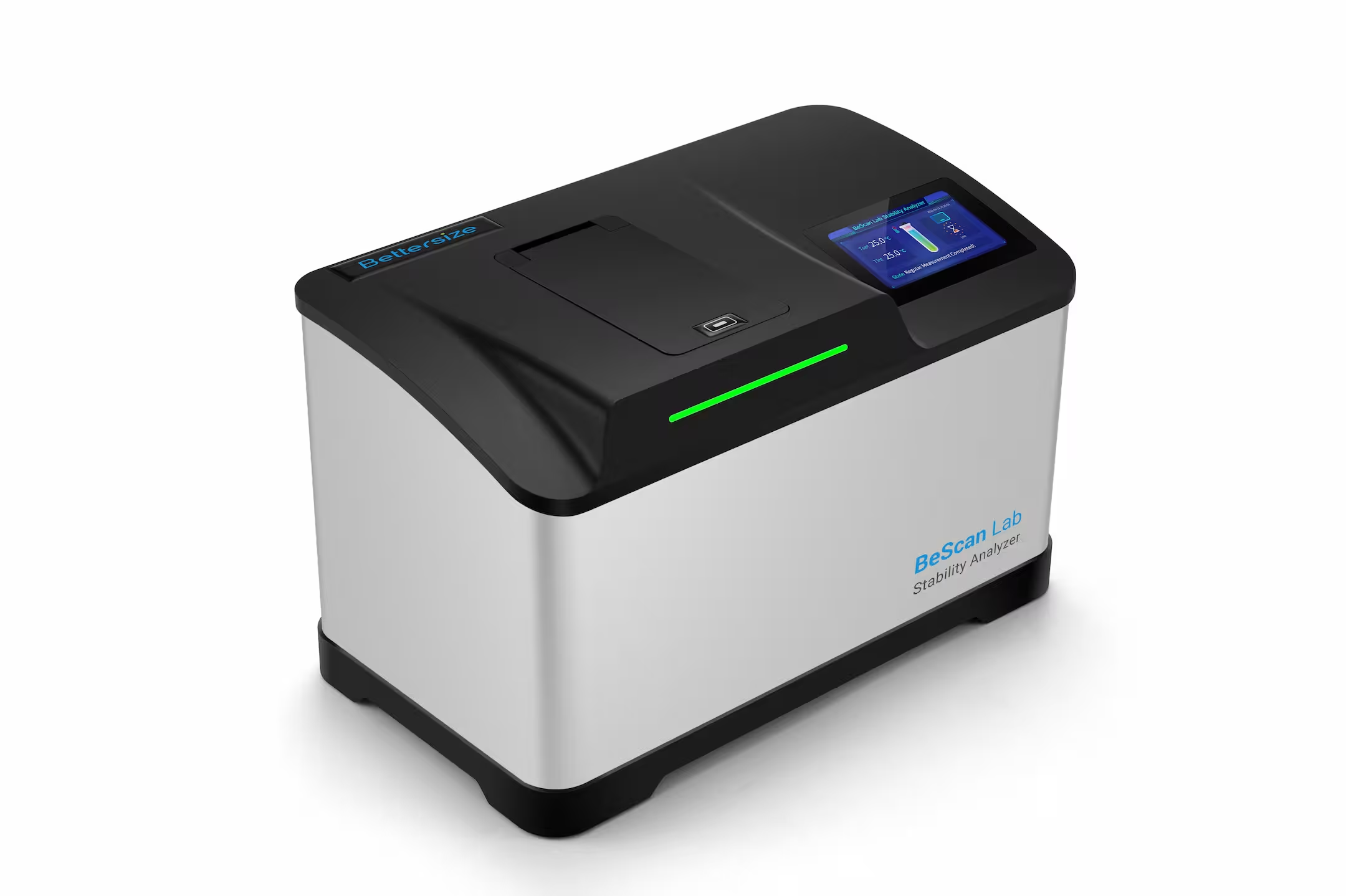
SMLS-Based Dispersion Stability Analyzer
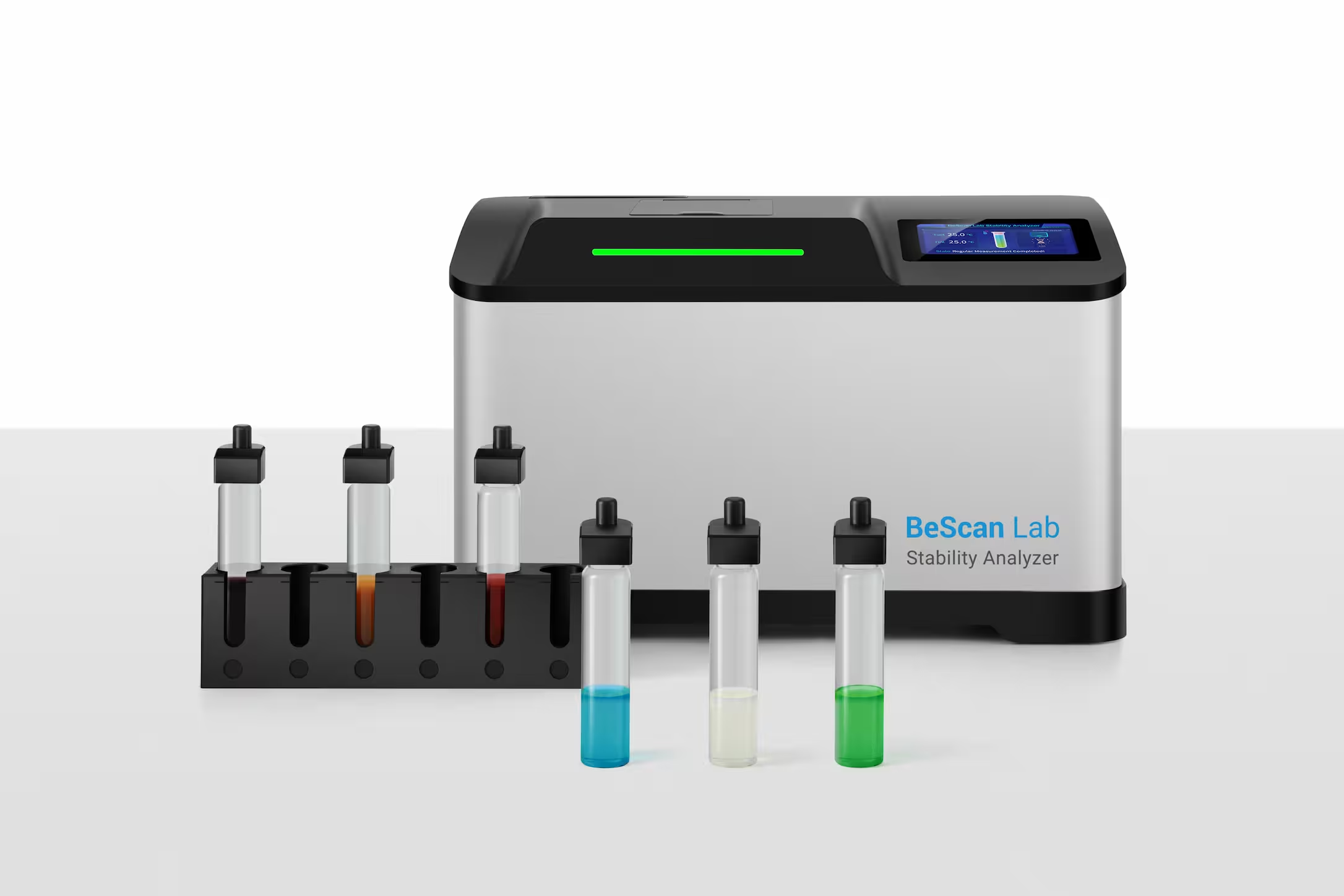
An SMLS-based stability analyzer for concentrated liquid dispersions including emulsions, suspensions, and foams. Delivers real-time, quantitative stability measurements at concentrations up to 95% v/v without dilution or mechanical stress. Temperature scanning up to 80°C enables accelerated shelf-life estimation and early instability detection.
SMLS Technology
Static Multiple Light Scattering (SMLS) combines an 880 nm NIR light source with simultaneous transmission (forward scattering) and backscattering detectors. Samples are analyzed at their native concentration — no dilution or mechanical intervention required.
Software
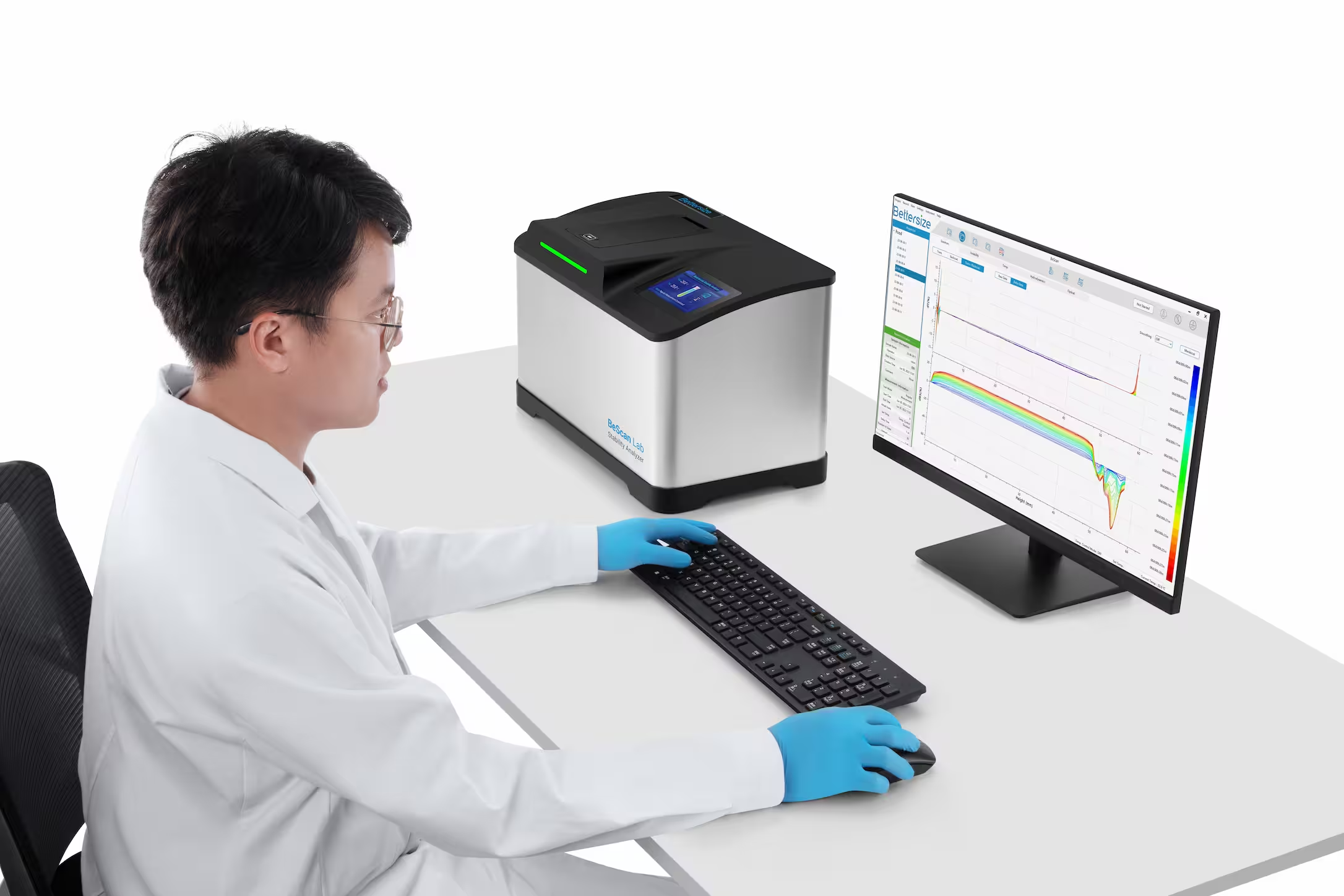
The BeScan Lab software visualizes ΔBS (backscattering change), ΔT (transmission change), and BSI (stability index) outputs alongside kinetic destabilization curves. Objective formulation comparison and long-term stability prediction from accelerated test data are built in.
Application Areas
Frequently Asked Questions
Yes. The backscattering detector in SMLS technology enables analysis of opaque and highly concentrated samples where transmission signal is insufficient. No dilution is required up to 95% v/v — samples are measured in their native state.
BeScan Lab quantitatively detects sedimentation, creaming, flocculation, coalescence, and phase separation. Each mechanism is distinguished through ΔBS and ΔT signal profile analysis along the full sample height.
Yes. ISO TR 13097 recommends direct optical measurement of dispersion stability without dilution. BeScan Lab's SMLS measurement principle is fully aligned with this requirement. The instrument also overlaps with ISO/TS 21357 for nano-object sizing by SMLS.
DLS (Dynamic Light Scattering) operates on diluted samples and provides point-in-time measurements; it carries a risk of artifacts in concentrated dispersions. SMLS works up to 95% v/v without dilution, produces continuous kinetic profiles, and detects instability events early and quantitatively. BeScan Lab follows ISO TR 13097 for direct measurement; DLS is governed by ISO 22412.
The BSI (Backscattering Index) and kinetic destabilization curves provide objective, reproducible numbers for comparing formulations. Data from temperature-controlled accelerated tests form the basis for long-term stability prediction and shelf-life estimation.
Yes. BeScan Lab supports both R&D and QC workflows. In formulation development, it enables stability comparison across different ingredient ratios. In quality control, batch-to-batch consistency is numerically verified using BSI and ΔBS profiles.
Quote & Information
Contact our team for technical consultation, demo requests, or pricing information. Over 25 years of analytical instrumentation expertise at your service.