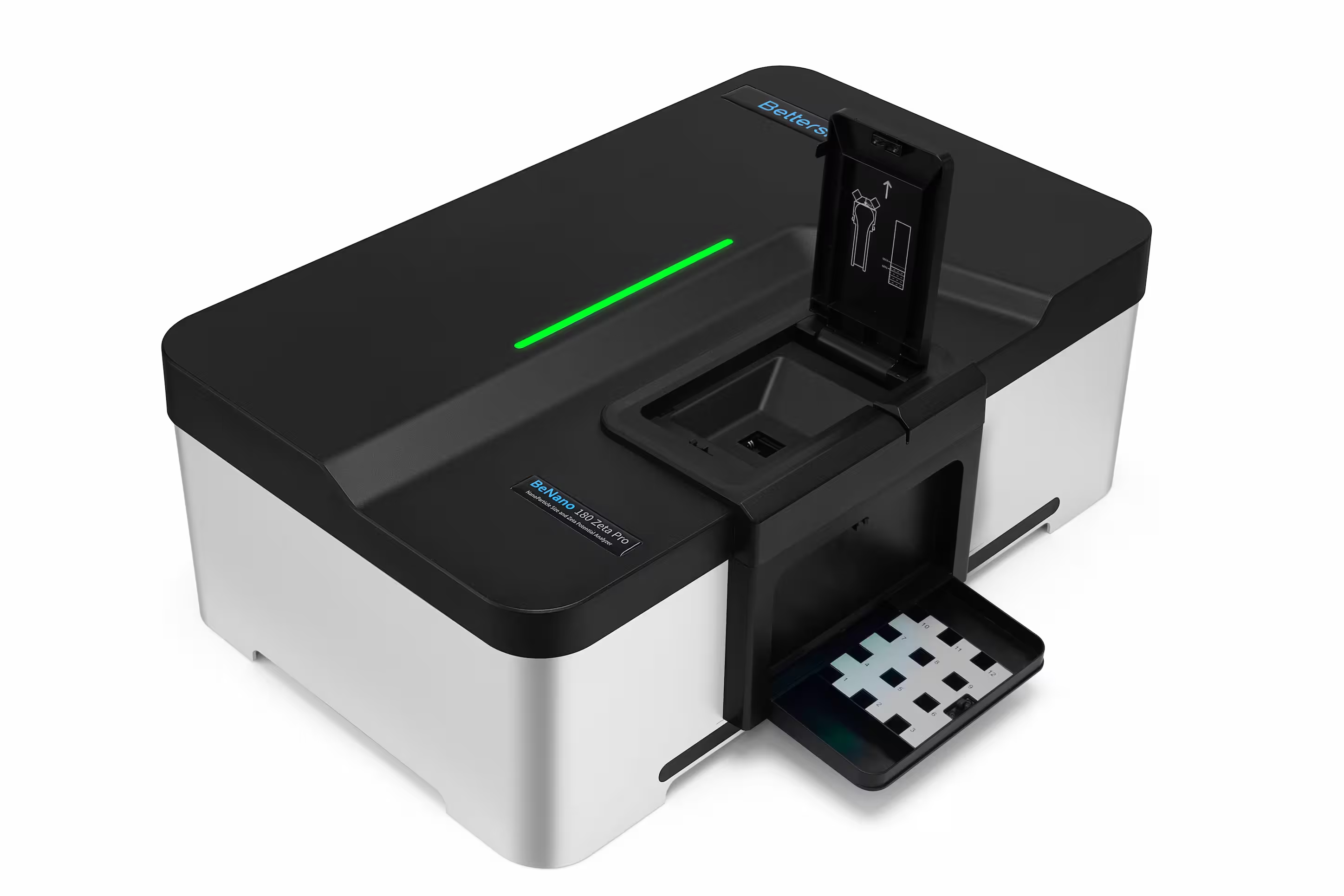
Nanoparticle Size and Zeta Potential Analyzer
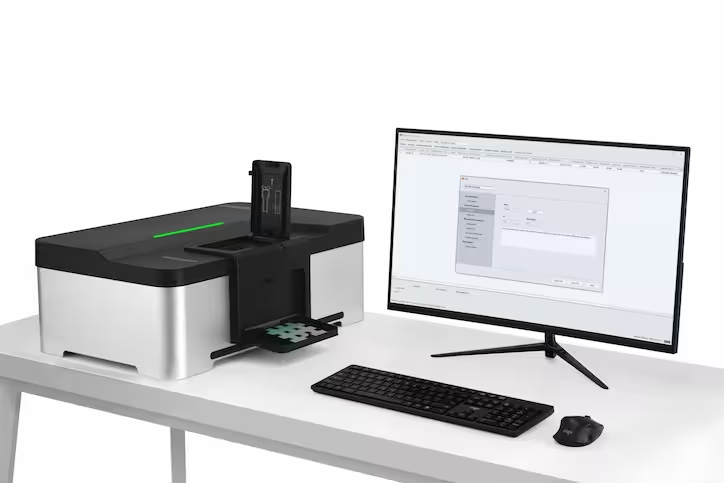
BeNano 180 Zeta Max combines Dynamic Light Scattering (DLS), Electrophoretic Light Scattering (ELS/PALS), and Static Light Scattering (SLS) on a single platform. With patented RI measurement, concentration analysis, and sedimentation, it delivers comprehensive nanoparticle characterization through 10+ techniques.
DLS + ELS Optical System
A 50 mW 671 nm solid-state laser and APD detector deliver fast, repeatable size analysis from 0.3 nm to 15 µm. PALS provides accurate zeta potential measurement even in low-charge samples near the isoelectric point and in high-salt media.
Patented Techniques
BeNano 180 Zeta Max goes beyond standard DLS/ELS with three patented measurement techniques. Refractive index (RI), particle concentration (LEDLS), and sedimentation sizing provide more complete characterization of complex samples.
Models & Accessories
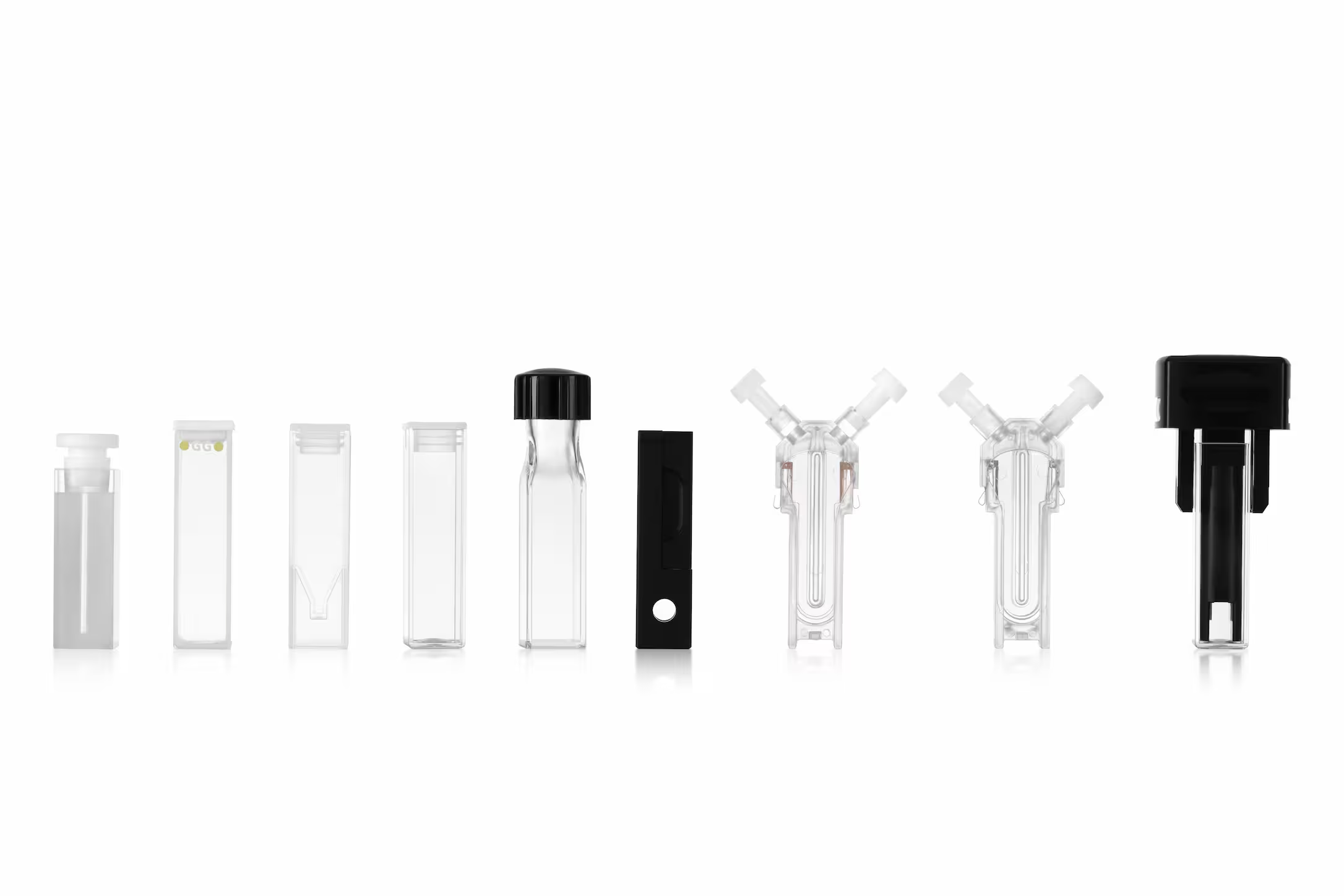
From basic DLS to the fully equipped BeNano 180 Zeta Max. Accessories extend analytical capability even further.
Software
Control DLS, ELS, SLS, microrheology, concentration, and sedimentation measurements from a central software platform. Automated workflows reduce operator workload.
Applications
Frequently Asked Questions
DLS covers 0.3 nm to 15 µm; sedimentation covers 1 µm to 50 µm. On the BeNano 180 Zeta Max, both techniques work together to eliminate masking in broadly distributed samples.
Zeta potential measurement requires a minimum of 64 µL. DLS requires as little as 3 µL. The platinum-folded capillary cell extends electrode lifetime in high-salt media.
Yes. BeNano 180 Zeta Pro and Max models integrate with GPC/SEC and FFF systems via the BFC-1 Signal Collector accessory. The 27 µL low-volume flow cell prevents band broadening; measurement speed is 0.42 s/result.
A 1% error in dispersant refractive index leads to a 2% error in DLS-derived size. The patented RI module on BeNano 180 Zeta Max measures RI from 1.2 to 1.6 with better than 0.1% accuracy using a wedge-shaped cuvette — eliminating this error source entirely.
Pharmaceuticals, biotechnology, nanomaterials, polymers, food and beverage, water treatment, cosmetics, and materials science. BeNano instruments are referenced in studies published in Nature Communications, Science Advances, and Advanced Functional Materials.
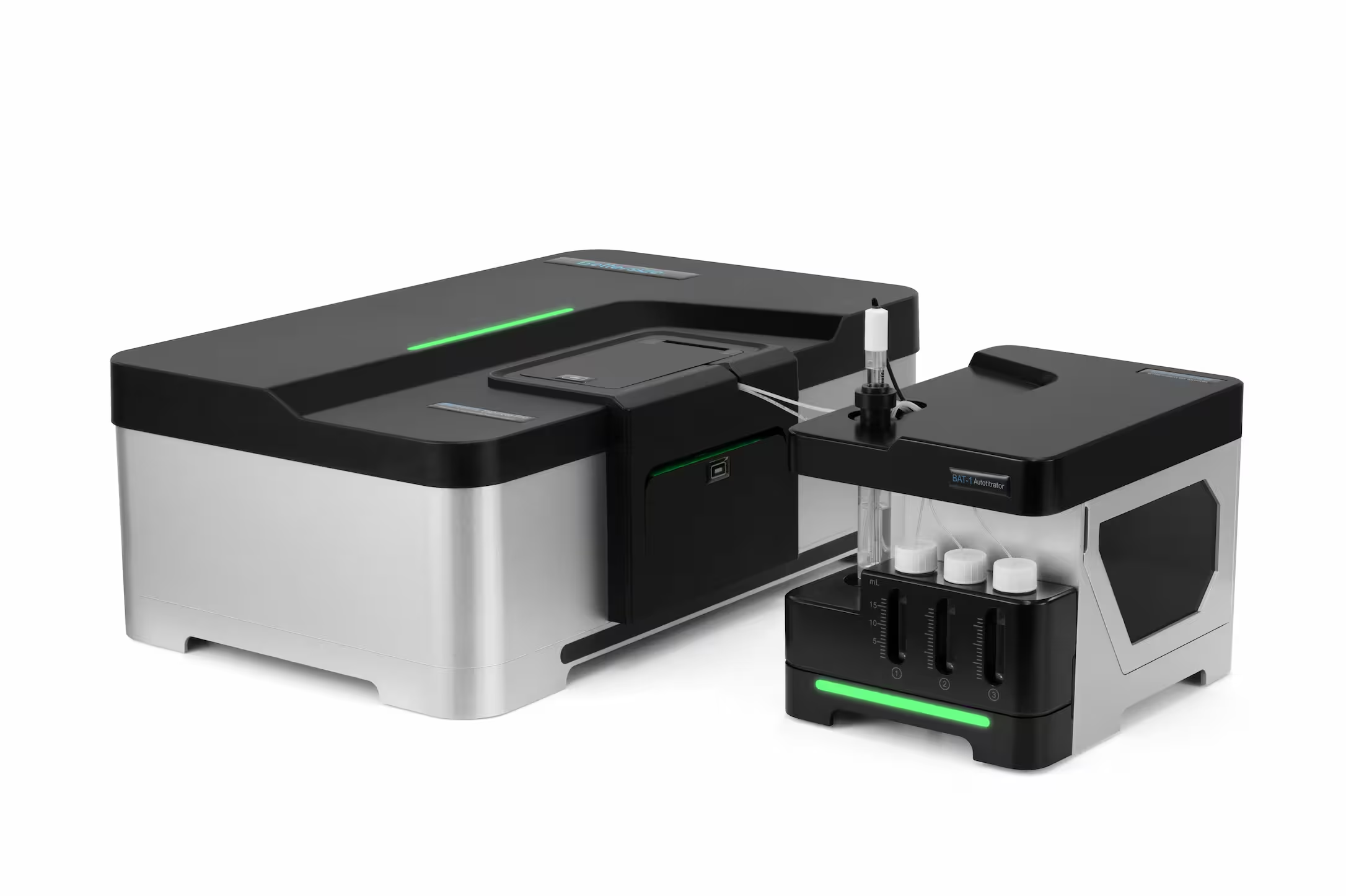
BAT-1 performs fully automated titration from pH 1 to 13. Each cycle delivers isoelectric point, size, and zeta potential trend data — in as little as 30 minutes per cycle. Minimal exposure to corrosive liquids improves operator safety and reduces human error.
Quote & Information
Contact our expert team for technical consultation, a demo request, or pricing. Over 25 years of experience at your service.